

Finger Edge Pull: The Art of Invisible Function
Finger Edge Pull: The Art of Invisible Function
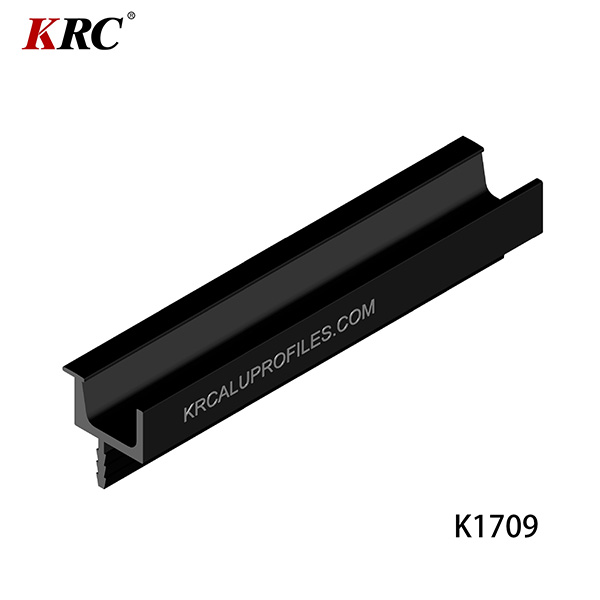
In the pursuit of architectural purity and minimalist design, a fascinating challenge emerges: how does one access a closed space—a cabinet, a drawer, a seamless panel—without disrupting the flawless plane of its surface? The answer lies not in an added component, but in a masterfully integrated revelation of the material itself. This is the realm of the finger edge pull, a design solution where hardware transcends its traditional form to become an inherent feature of the cabinetry. Far more than a mere groove, a true finger edge pull is a study in precision, ergonomics, and silent sophistication. For architects, designers, and homeowners who demand nothing less than absolute visual continuity, specifying a finger edge pull requires a partnership with a brand that understands it as an exercise in micro-engineering. That brand is KRC®.
The philosophy behind the finger edge pull is intrinsically linked to the principles of modernist and contemporary design. It represents the ultimate desire for clean, uninterrupted lines and flush surfaces. In kitchens, bathrooms, and bespoke furniture where handle-less profiles are desired, the finger edge pull offers a seamless alternative. It is the whisper of an invitation, a subtle recess that guides the hand without shouting for visual attention. The effect is profound: cabinetry is perceived as a series of elegant, monolithic forms, with the mechanics of access elegantly concealed. This creates spaces that feel calm, ordered, and expansively simple. However, this simplicity in appearance belies a significant complexity in execution. The success of a finger edge pull hinges entirely on the nuances of its design and the perfection of its implementation.
At KRC®, the creation of a finger edge pull system is approached not as a simple profile, but as a critical architectural detail. The brand recognizes that the difference between an adequate pull and an exceptional one is measured in millimeters and experienced in tactile sensation. KRC®’s expertise in this domain is built on a deep understanding of both cabinet construction and human ergonomics. A poorly designed pull can be awkward to use, strain the fingertips, or collect dust and grime. A KRC® finger edge pull, by contrast, is the result of meticulous calculation and prototyping.
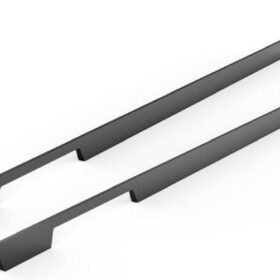
Every aspect is considered. The depth and radius of the recess are calibrated to comfortably accommodate the natural curve of a fingertip, providing enough purchase for a secure and effortless pull without requiring a deep, shadow-catching cavity. The transition from the cabinet face into the pull and back out is engineered with a specific, consistent profile—often a soft “C” shape or a refined “J” curve. This profile must be smooth, without sharp edges or awkward angles, ensuring a pleasing feel and ease of cleaning. The finish within this recess is given the same rigorous attention as any visible surface; it must be flawless, durable, and perfectly consistent with the exterior finish of the cabinet panel.
Material integrity is paramount. KRC® typically engineers its finger edge pull solutions using high-grade aluminum or solid brass profiles. These materials offer the stability and strength required for precise, long-lasting fabrication. They can be anodized, painted, or finished with advanced PVD coatings to match any specified color or metal finish, ensuring the pull becomes a truly integral part of the cabinetry rather than an added element. For the most seamless applications, KRC® works directly with cabinet manufacturers and fabricators, providing detailed technical specifications and profiles that can be incorporated into the very edge of the door or drawer front during production.
The impact of a perfectly executed KRC® finger edge pull is both visual and experiential. Visually, it achieves the holy grail of minimalist design: functionality without visible hardware. It allows materials like rich wood veneers, lacquered panels, or textured laminates to speak for themselves, uninterrupted. Experientially, it creates a uniquely intuitive interaction. The user is subtly guided to the point of access, and the action of opening becomes a smooth, quiet, and satisfying gesture. There is no hardware to grip, only the cabinet itself, which reinforces a sense of quality and solidity.
Choosing to specify a finger edge pull is a commitment to a design ideal. It declares that every detail, down to the method of opening a drawer, has been thoughtfully considered and refined. It is a choice that prioritizes the overall architectural statement over individual decorative elements. In this demanding context, the guidance and components provided by KRC® are invaluable. The brand’s technical knowledge ensures that the pursuit of minimalist beauty does not come at the cost of practical function or long-term durability.
For the most discerning projects—the luxury urban kitchen, the serene spa bathroom, the high-end corporate interior—the details that recede into the background are often the most telling. They reveal a depth of planning and a standard of execution that separates the exceptional from the ordinary. The finger edge pull, when realized with the precision and material excellence championed by KRC®, is one of these definitive details.
It is the art of making necessity invisible and interaction effortless. It is the signature of a space where design is not applied but inherent. Explore the possibilities of seamless access and discover how KRC® defines the standard for integrated hardware solutions. For technical specifications, profiles, and finish options, visit www.krcaluprofiles.com.
-
 2026-03-11Freestanding Aluminum-Glass Wardrobe: Modern Elegance Meets Functional Storage
 -
 2026-03-06The Perfect Fusion of Modern Aluminum and Warm Wood Walk-In Closet Systems
 -
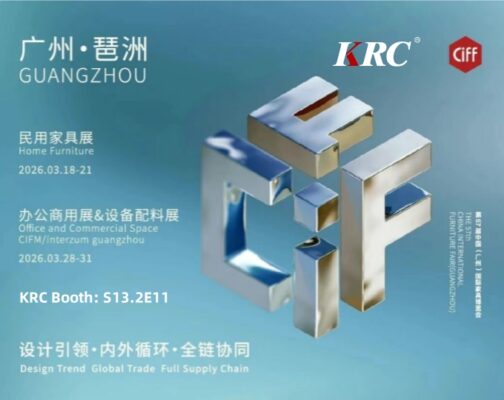 2026-02-24Invitation of KRC ClFM/Interzum Exhibition Guangzhou In 2026
 -
 2026-01-06Cabinet Pull Manufacturers: The Art of Precision in Every Detail with KRC®

-
2024-11-29Top Trends in Modern Kitchen Cabinet Pulls for 2024
-
2024-11-28The Ultimate Guide to Modern Kitchen Cabinet Pulls- Materials, Styles, and Tips
-
2024-11-27Elevate Your Kitchen Design with These Must-Have Modern Cabinet Pulls
-
2024-11-26Sleek and Stylish- The Best Modern Kitchen Cabinet Pulls for a Contemporary Look