

Thermal Insulation Properties of Aluminum Glass Door Handles
Aluminum glass door handles play a significant role in maintaining the thermal insulation of a building. Their unique properties make them an ideal choice for energy-efficient construction, providing numerous advantages that enhance indoor comfort and reduce energy consumption. Let’s explore the thermal insulation properties of aluminum glass door handles in detail:
Thermal Conductivity
Aluminum is a highly thermally conductive material, meaning it readily transfers heat from one surface to another. This property of aluminum makes glass door handles efficient thermal conductors, allowing heat to flow easily through them. When the temperature outside is higher than indoors, the heat transfers from the outside to the inside, increasing the indoor temperature. Conversely, when the temperature inside is higher, the heat transfers from the inside to the outside, helping to maintain a comfortable indoor environment.
Surface Temperature
The surface temperature of aluminum glass door handles directly influences thermal comfort. Aluminum has a low specific heat capacity, meaning it absorbs less heat than other materials. As a result, aluminum door handles do not get excessively hot in high-temperature environments, such as during summer afternoons. This prevents heat transfer to the hands when opening the door, ensuring comfort and preventing heat gain.
Shape and Design
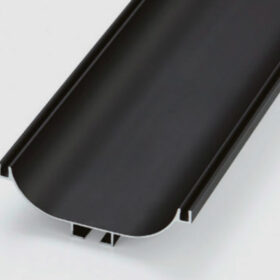
The shape and design of aluminum glass door handles can also impact thermal insulation. Handles with a thin profile and a wide surface area provide a larger surface for heat transfer. This allows for more efficient thermal conductivity, leading to better insulation. Additionally, handles with multiple fins or grooves increase the surface area, further enhancing thermal performance.
Thermal Breaks
Thermal breaks are a crucial feature in aluminum glass door handles that minimize heat transfer. These breaks are made of non-conductive materials, such as nylon or plastic, and are strategically placed between the inner and outer parts of the handle. By breaking the thermal bridge, thermal breaks reduce heat flow through the handle, preventing heat transfer to the interior or exterior.
Weather Stripping
Weather stripping is a sealant that is applied around the edges of aluminum glass door handles to prevent air infiltration and moisture penetration. This material forms a tight barrier that prevents warm or cold air from entering the interior through the gaps between the handle and the door frame. By minimizing air leakage, weather stripping enhances the thermal insulation of the door, reducing energy loss and maintaining indoor comfort.
Conclusion
Aluminum glass door handles with superior thermal insulation properties contribute significantly to energy efficiency and indoor comfort. Their high thermal conductivity, low surface temperature, optimized shape and design, thermal breaks, and weather stripping work together to minimize heat transfer, reduce energy consumption, and provide a pleasant indoor environment. By understanding and considering the thermal insulation properties of aluminum glass door handles, architects and building professionals can make informed decisions that optimize the energy performance of their projects.
-
 2026-04-16KRC Aluminum Gola Profiles: Seamless Handleless Cabinet Design
 -
 2026-04-10Five Regions, One Booth: KRC’s Aluminum Hardware Conquered CIFF 2026
 -
 2026-03-11Freestanding Aluminum-Glass Wardrobe: Modern Elegance Meets Functional Storage
 -
 2026-03-06The Perfect Fusion of Modern Aluminum and Warm Wood Walk-In Closet Systems


-
2024-11-29Top Trends in Modern Kitchen Cabinet Pulls for 2024
-
2024-11-28The Ultimate Guide to Modern Kitchen Cabinet Pulls- Materials, Styles, and Tips
-
2024-11-27Elevate Your Kitchen Design with These Must-Have Modern Cabinet Pulls
-
2024-11-26Sleek and Stylish- The Best Modern Kitchen Cabinet Pulls for a Contemporary Look